
The CICM Hot Case Flow is the most challenging part of the Fellowship Exams. There are numerous resources, as well as many tried-and-tested methods. Of course, everyone will claim that theirs is better, or worse, the best.
Mine, however, and unapologetically, is better. I mean the best.
Below is a suggested approach, along with the “exact monologues” verbatim I used when preparing for my exam. They have gone through the battlefield, vetted by a range of experienced consultants and examiners. Generally, it makes sense to have an optimal flow that helps with time economics.
How to use the Hot Case ‘Flow’
There are 3 stages to mastering the Hot Case Flow:
- The Novice: Learn the sequence below and practice building a solid foundation to ensure optimal Flow.
- The Intermediate: After 15 – 20 hot cases, you now have the basics right. Now is the time to spend shaving off unnecessary bits to adapt to the cases specifically.
- The Advance: You have done at least 60 hot cases. You walk in, and you know exactly what to do and what to look for with your examination skills. You are in Flow.
- The Yoda: You Flow in – and you pass the exam.
Table of Contents
The Sequence of ‘The Flow’
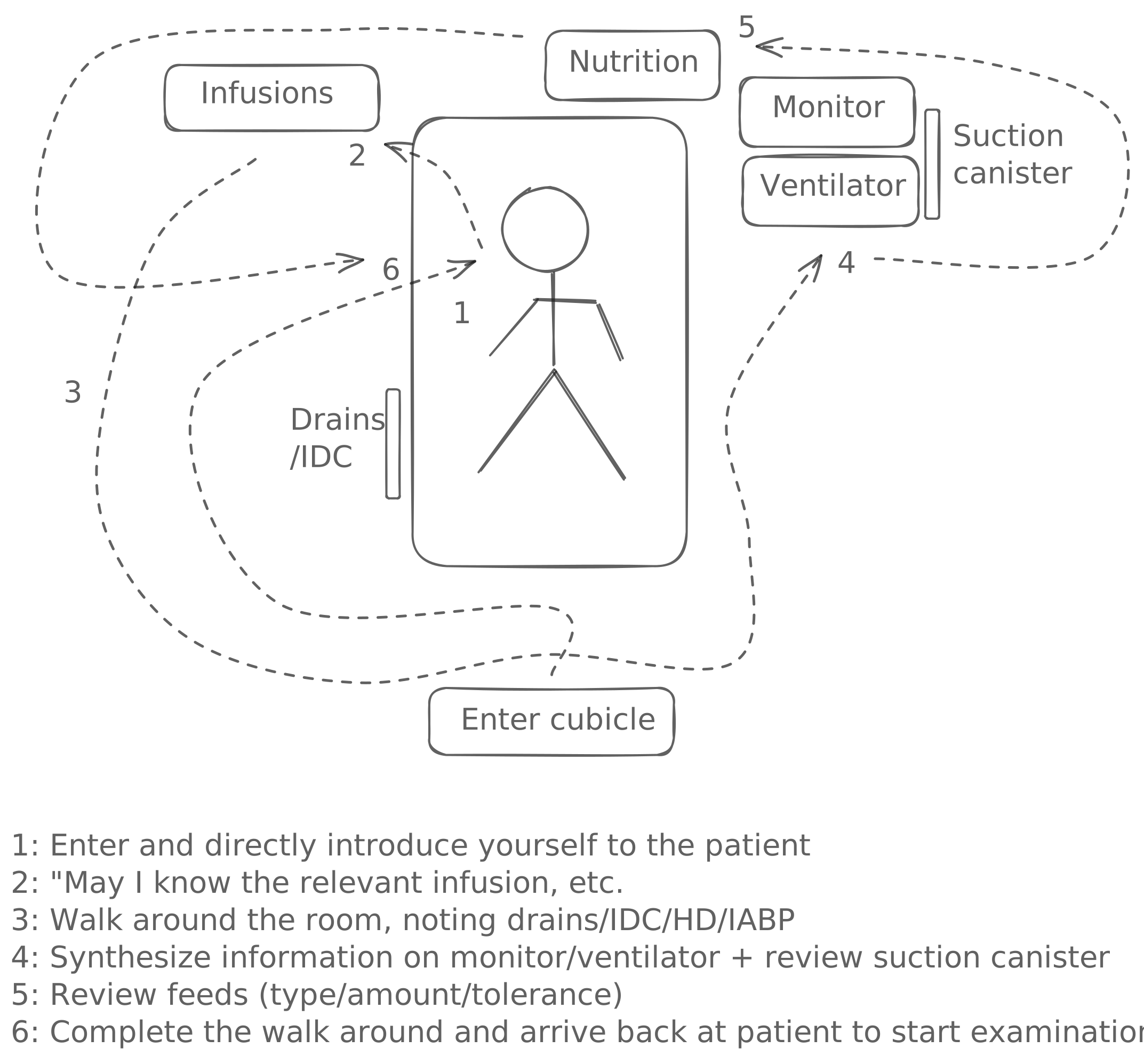
1. 💃 Dance to the Flow
⏳ Time stamp: 0:00 – 1:30 minutes
Good morning, my name is Nilesh. I’m an ICU doctor. I’m going to examine you over the next 10 minutes. Thank you.
Infusion
- “Can you tell me the relevant infusion?”
- “May I know the trend of the infusion?”
- “Has the patient been recently paralyzed?”
- Look at monitor and make a quick comment if indicated
- “Wow, I note the patient is on double-strength Noradrenaline – I wonder if the BP is augmented for cerebral vasospasm.”
Urine
- “Is the urine output augmented with diuretics?”
- “May I know the general trend of output over the last 12-24 hours?”
- One senior examiner once rattled off every hour urine output to me – he made his point!
- Say “general” – I want to know low, high, or adequate.
Drains
- “I note multiple drains coming from the [chest] or [abdomen].”
- “I will come back and review them closer during my examination.”
Monitor
- “I note sinus rhythm with 1st degree heart block – I will confirm this with an ECG.”
- “I note that the MAP is adequate”
- “I note the wide pulse pressure”
- “I note 2 arterial lines tracing”
- “I note a large CV fusion waveform”
- “I note the EVD and waveform – May I transduce the waveform?”
- “I note the Pulse Pressure Variation is 25%”
Ventilation
- “The patient is on minimal ventilatory supports”
- “I note the patient is on a Spontaneous Breathing Trial (if FiO2 0.3 PEEP 5 PSupp 5) – may I know the duration of the trial?”
- “I note the PEEP – I would like to know the Plateau pressure to ascertain the Driving pressure” (if relevant)
- “I would like to know the intrinsic PEEP”
Pacing
- “I note the patient is atrially or ventricularly paced”
- “I would like to know his capture and sensitivity thresholds”
- “When was it last checked”
Nutrition
- “I note current feeds are [PPMF / 2 calorie feed / semi-elemental]”
EVD
- “I note blood stained CSF in the drainage bag”
- “Has there been a change in the zero height the EVD”
- “May I know the trend of CSF drainage”
Hemodialysis
- “I note the patient is on [Citrate CVVHDF / IHD] currently. I will come back and interrogate the machine later.”
IABP
- “I note the patient is currently on a [1:1 / 1:2 / 1:3] augmentation. I will interrogate the machine at the end of my examination.”
⌛️ Time stamp: 1:31 – 10:00 minutes
2. 🎯 The Examination Flow
Screening GCS
Always start with screening GCS. Always.
“Hi James, I’m going to examine you now. I’m going to uncover you but keep you decent during my examination.”
- Just be mindful of the exposure – if you’re done with the exposure and have acquired your examination findings, you should re-cover the patient. This demonstrates empathy and respect for the patient.
“James, Open your eyes. Stick your tongue out. Squeeze my fingers. Wiggle your toes.”
“Sorry James, just applying some pressure on your forehead.”
“Sorry, James, again, I’ll be applying pressure on your fingers and toes.”
Systemic Examination
Decide between the following:
- CNS – CVS/RS/GIT, or
- CVS/RS/GIT (in relevant prioritized order) -> CNS
CNS first or CNS last – always do CNS!
Mention salient findings during examination. This will help trigger your memory for the presentation, or if you forget, at least the examiners are aware that you noted and mentioned it.
Comment on all lines, drains, scars, wounds, dressing as a standard of practise.
💎 Bonus
🪐 The ‘Universe’ Concept
This is a useful concept to adopt as you approach the different universes during hot case examination. Each layer contains its own intricacies to appreciate, and when you think in this way, you will then have a systematic way of embracing the hot case, literally, every step you take towards the patient.
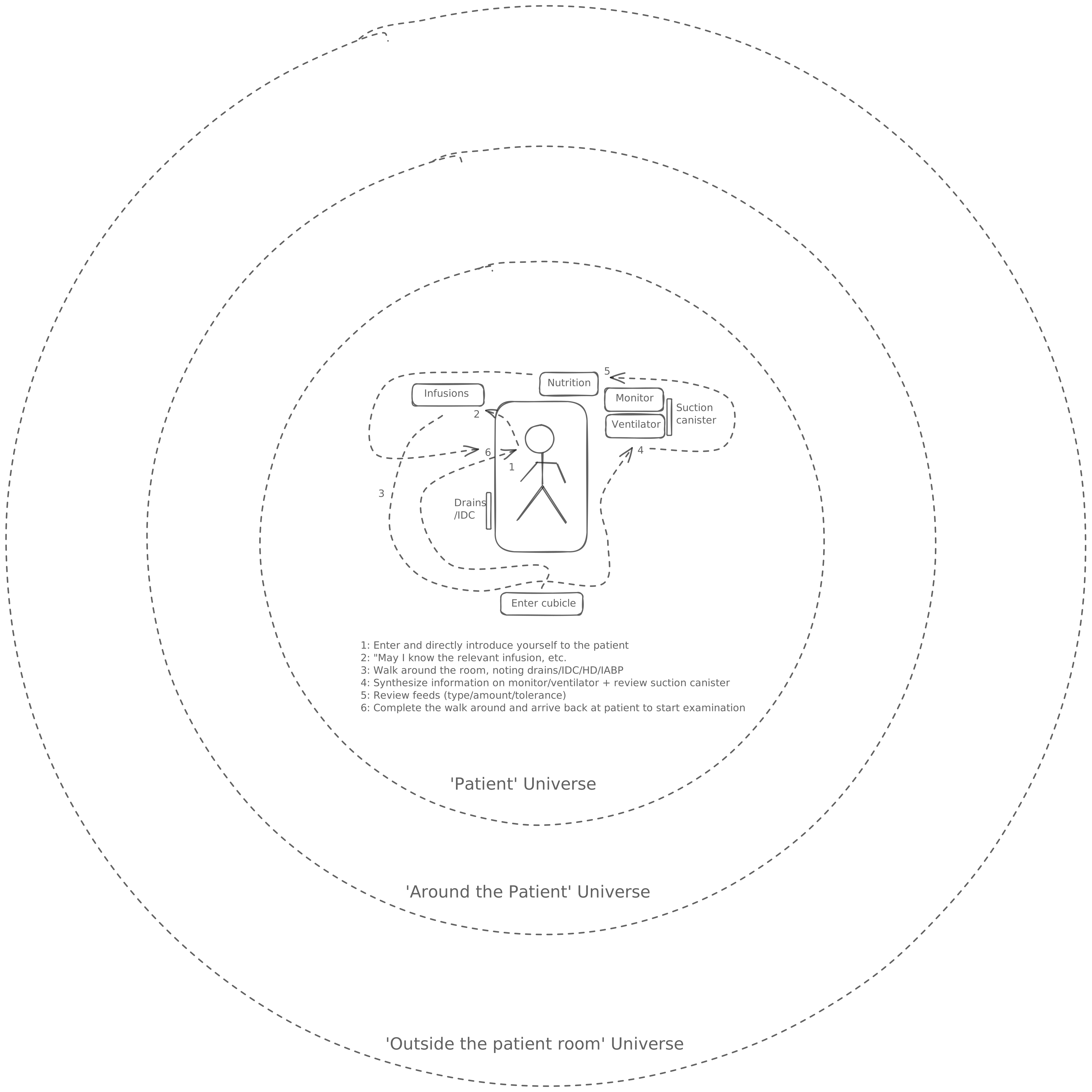
The ‘Outside the patient room’ Universe
- Look outside the room for information: Delirium sticker, Contact Precaution, ‘Wash hand sign’ = think C.difficile infection, Double strength Noradrenaline sticker, Dialysate bags, C-MAC trolley ect.
The ‘Around the patient’ Universe
- Look at the walls and the corners of the room
- Don’t miss the walking stick, home CPAP, wheelchair, family photos on the wall ect.
The ‘Patient Universe’ Universe
- This is essentially the hot case where the focus is now on the patient.
If you need references, check out The Ultimate Resource Guide for the FCICM Fellowship Exam
If you need to prepare with the Fellowship Written Preparation, start with How to Prepare for the FCICM Fellowship Exam: The Setup Most People Skip
For more insightful advice to give you an unfair advantage, cutting through all the noise and offering you crystal clear clarity on your exam journey, join my newsletter below and get the best podcast resources in your inbox, stat.
As always, you got this! 💪🏼