
- 1You don't need to read a textbook cover to cover. Pick one central reference.
- 2Use the syllabus and 8–10 years of past papers, done to time.
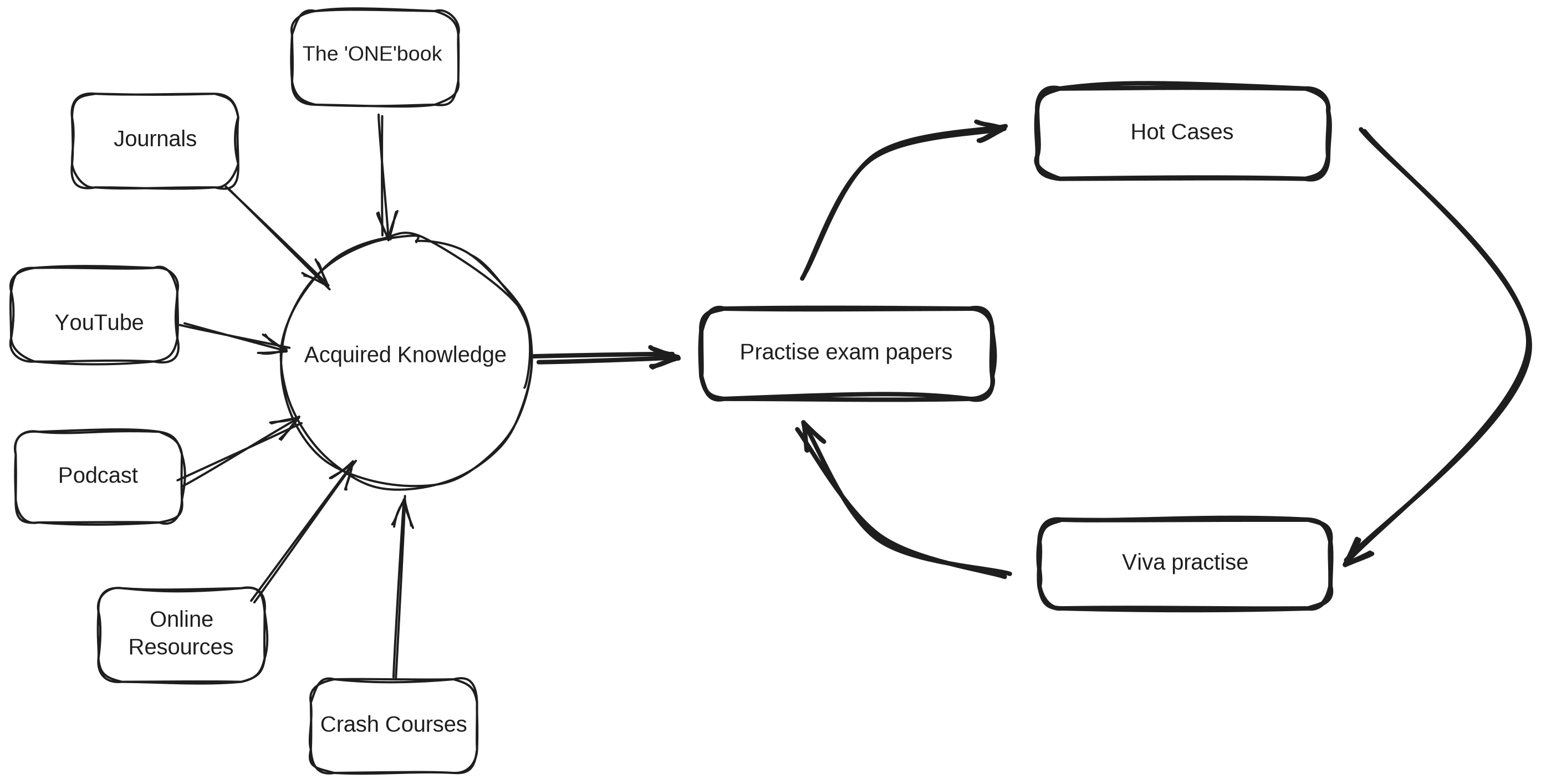
- 3Learn, write, apply: cycle every resource into SAQs, hot cases and vivas.
After passing the Fellowship Exam in 2025, the second time around, I can attest that it is going to be the hardest thing you are going to do.
It will require commitment, dedication, and sacrifice, along with other demands like clinical mastery, mental resilience, and a battle-tested strategy. Whether you’re just beginning your journey or are a few months away from taking the written or viva exam, this guide offers a comprehensive roadmap to help you pass with confidence. You got this!
For those seeking guidance, this resource guide should prove invaluable and rapidly get you on track to streamlining your workflow and saving you immense amount of time!
Why Write This Guide?
This guide is curated from firsthand experience, peer wisdom, and the latest resources to give you an edge. I know how hard it was when I was preparing, and I want to share all the knowledge, resources, and strategies that helped me pass this exam. There are no shortcuts. However, having the correct map and the best tools will help you get there. There are so many resources out there that beg the question: Where do I start?
What Is the ICU Fellowship Exam?
The Fellowship Exam is the final hurdle to becoming a consultant intensivist in Australia and New Zealand. The process includes:
- Written Exam – Short Answer Questions (SAQs)
- Clinicals (Hot Cases) – Bedside assessments with real ICU patients
- Viva – A series of oral exams covering various ICU domains
What You Don’t Need To Do
- Read a book cover to cover.
- Read a whole textbook.
- Read Oh’s Manual (because examiners use it to create questions)
- Write out notes. The internet has done this for you.
- Work part-time to study.
What You Need To Do
- Use the official exam syllabus.
- Do at least 8-10 years of past year questions to time.
- Commit to attending your unit teaching program (written weekly questions and hot cases)
- Use the resources below to save yourself time and money.
Books You Must Read
None. Yes, I said it.
There are no books that you must read, cover to cover. Instead, have one book that can serve as your central reference, pulling all the information in. The reality is that there are candidates who have read books that failed, and those who skimmed books that passed.
The truth:
Passing the written exam involves answering the question in 10 minutes in a structured manner with a clinically matured approach using the acquired knowledge.
You don’t need to read a whole book to do that. You have been forewarned.
Below are the best options to make them your ‘ONE’ book:
The ‘ONE’ book
- Questions for the Final FFICM Structured Oral Examination
- Oxford Textbook of Critical Care (2nd Edition)
- Textbook of Critical Care (8th Edition) by Jean Louis Vincent
- Irwin and Rippe (Latest Edition)
- The Final FFICM Structured Oral Examination Study Guide by Eryl Davies
Clinical examination books
- Examination in Intensive Care Medicine by Carole Foot (Kindle)
- Clinical Examination (7th Edition) by Talley O’ Connor
Other books
- Data Interpretation by Bala Venkatesh
- Critical Care Secrets (Latest edition)
- OSCEs for the Final FFICM
YouTube Channels Worth Subscribing To
- Prague ICU by Michal Pazdernik
- Houston Methodist DeBakey CV Education
- Radiology Tutorials by Dr. Michael Nel
- The Alfred Intensive Care Academic Centre
- Dr.Pradeep Rangappa
- NeuroOpthalmology with Dr. Andrew G. Lee
Videos on written SAQ technique, published on the Sydney Short Course in Intensive Care Medicine website.
Hot case channels and videos
- First Fellowship Hot Case Guide by Ken Hoffman
- Fellowship Exam Hot Case: Hot Tips to Ace Your Case by Oliver Walsh
- SAFE Course: How to Examine and Present a Hot Case by Arvind Rajamani
- Fellowship – Hot Case Approach by Arvind Rajamani
Podcasts to Build ICU Thinking
- tasty morsels of Critical Care by Dr Andy Neill
- EMCRIT Podcast by Scott Weingart
- IBCC Podcast – Seth Trueger and Josh Farkas’s insights
- ICU Fellowship PrepCast by Dr Swapnil Pawar and Madhuri (Maddie) Anupindi
- ICU Ed and Todd-Cast
- Critical Care Time
- Mastering Intensive Care by Andrew Davies
- ESICM Talk Podcast by ESICM
High-Yield ICU Websites
- Professional documents – highly examinable SAQ content
- DerangedPhysiology.com – SAQ goldmine
- TheBottomLine.org.uk – Trial summaries at your fingertips
- Lifeinthefastlane.com – ECGs, tox, clinical pearls
- ibcc – Resus-centric with real-world tips
- NeuroResus – Complete neuro-resuscitation content
- Radiopaedia exam playlist – radiology-focused practise
- ICU OnePager – key concepts on one page
- Exam-style writing paper – download and print in bulk for practise
Courses That Helped Me
- South Australian Fellowship Preparation Courses by the South Australian Intensive Care Association (SAICA)
- Sydney Short Course in Intensive Care Workshop
Bonus: The Learning Cycle
If you want to be equipped with tested ancient wisdom and strategies to overcome the obstacles in your path as you embark on your exam journey, check out The ICU Life Manual: The Obstacle is The Way – the very same wisdom I used that helped me pass the EDIC and the ICU Fellowship Exam within 12 months!
Also…here is a key concept on how to use all the resources above to develop your core knowledge and utilise them as part of your onward practise.
Reinforce your learning with practise questions, then incorporate them into your hot case and viva practise. This cycle of learning-writing-applying will ingrain your core concepts and content for the examinations ahead.


Intensive care specialist and educator. Founder of the ICU Accelerator Academy, 1:1 coaching for the ICU Fellowship Exam.
More about me